This is a fun paper on the energy requirements and GHG emissions for drones vs other modes of delivery: https://www.cell.com/patterns/fulltext/S2666-3899(22)00180-5
It’s a couple of years old, and only looks at drones with small payloads (< 0.5kg). I was initially surprised at how much more efficient they are than most other delivery options (spoiler: not really), including electric vans.
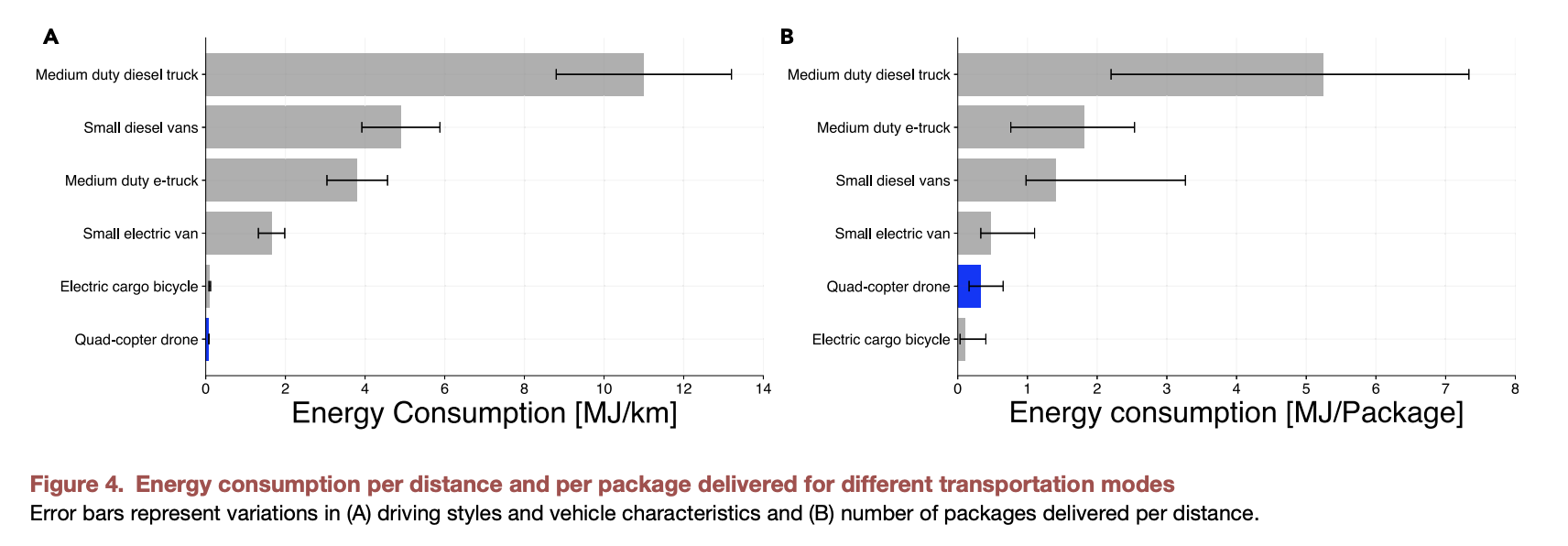 (The above assumes drone-sized packages of < = 0.5kg)
The researchers created a drone delivery energy model based on tests + physics modelling + ML. They found that “drone delivery […] can be up to 94% lower than conventional transportation modes, with only electric cargo bicycles providing lower GHGs/package.”
BUT these impressive efficiencies don’t account for the fact that a drone can only deliver a few small packages at a time. Drones look great if we compare a truck delivering one small package vs a drone doing the same. The picture is very different when we look at weight-adjusted efficiency: 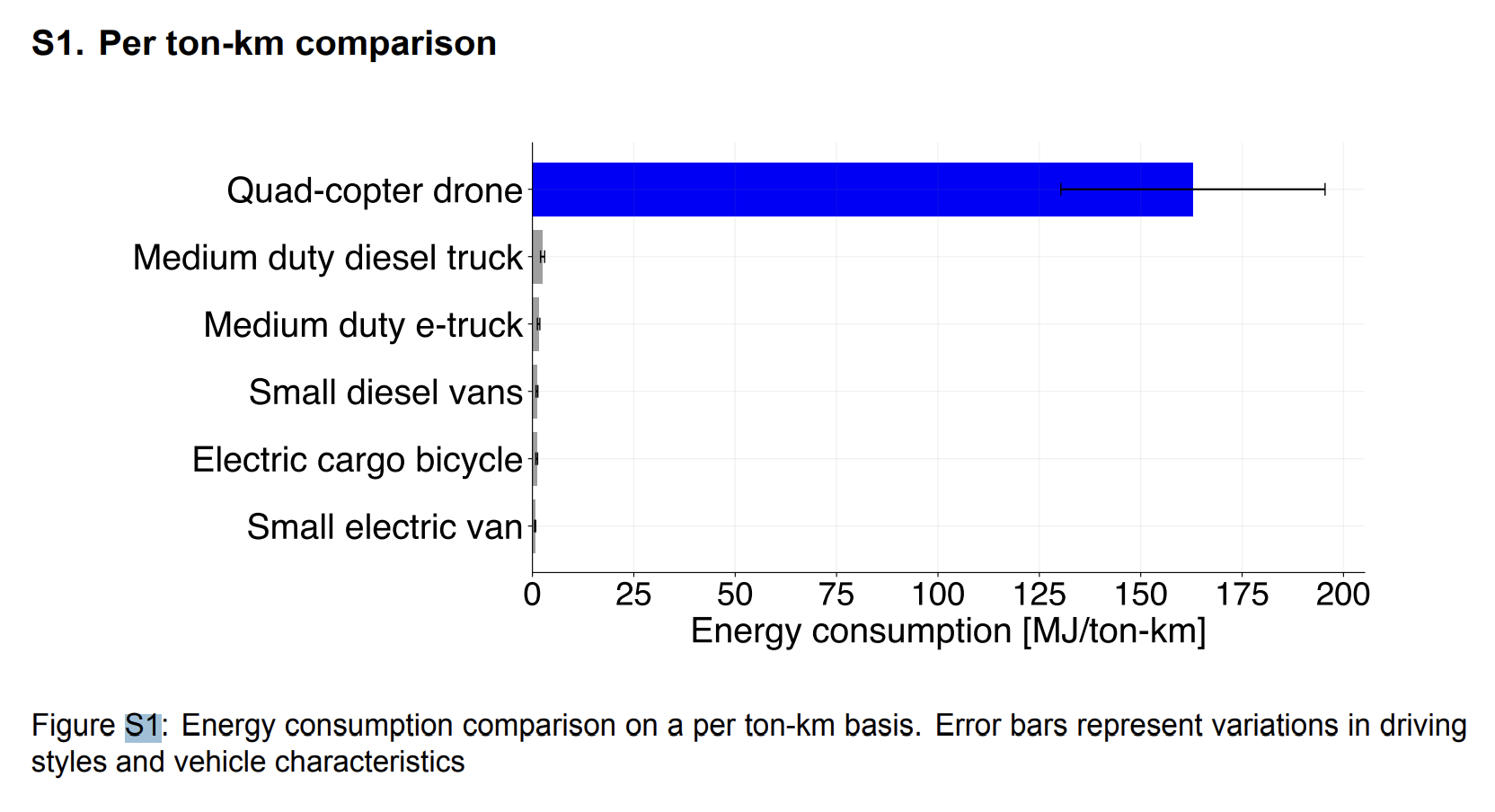 Probably this is why the paper highlights deliver for “very small packages such as medical deliveries, critical parts, or other time-sensitive payloads.”
The real lesson is that e-bikes have both decent cargo capacity AND low emissions.
Some other things that stood out:
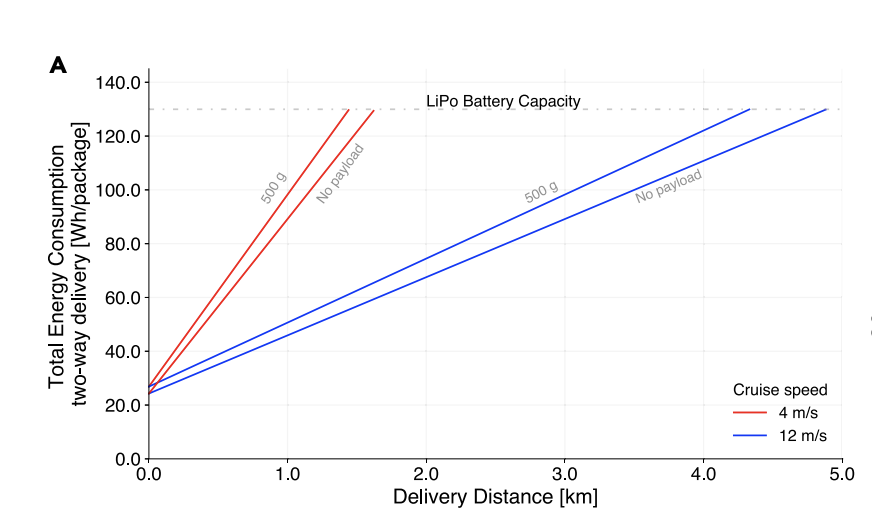
- There is very little different in power consumption at speeds between 4 and 12m/s. But since faster speeds translate to less time in the air, faster means less energy per delivery.
- Counter-intuitively, drones may have longer delivery paths than road-based delivery due to airspace restrictions.
- “Total energy consumption can be reduced by 34% by reducing vertical takeoff”